
Preparing to Sell
Low-Cost Improvements to Make Before Selling
By PropertyReady AI · Published
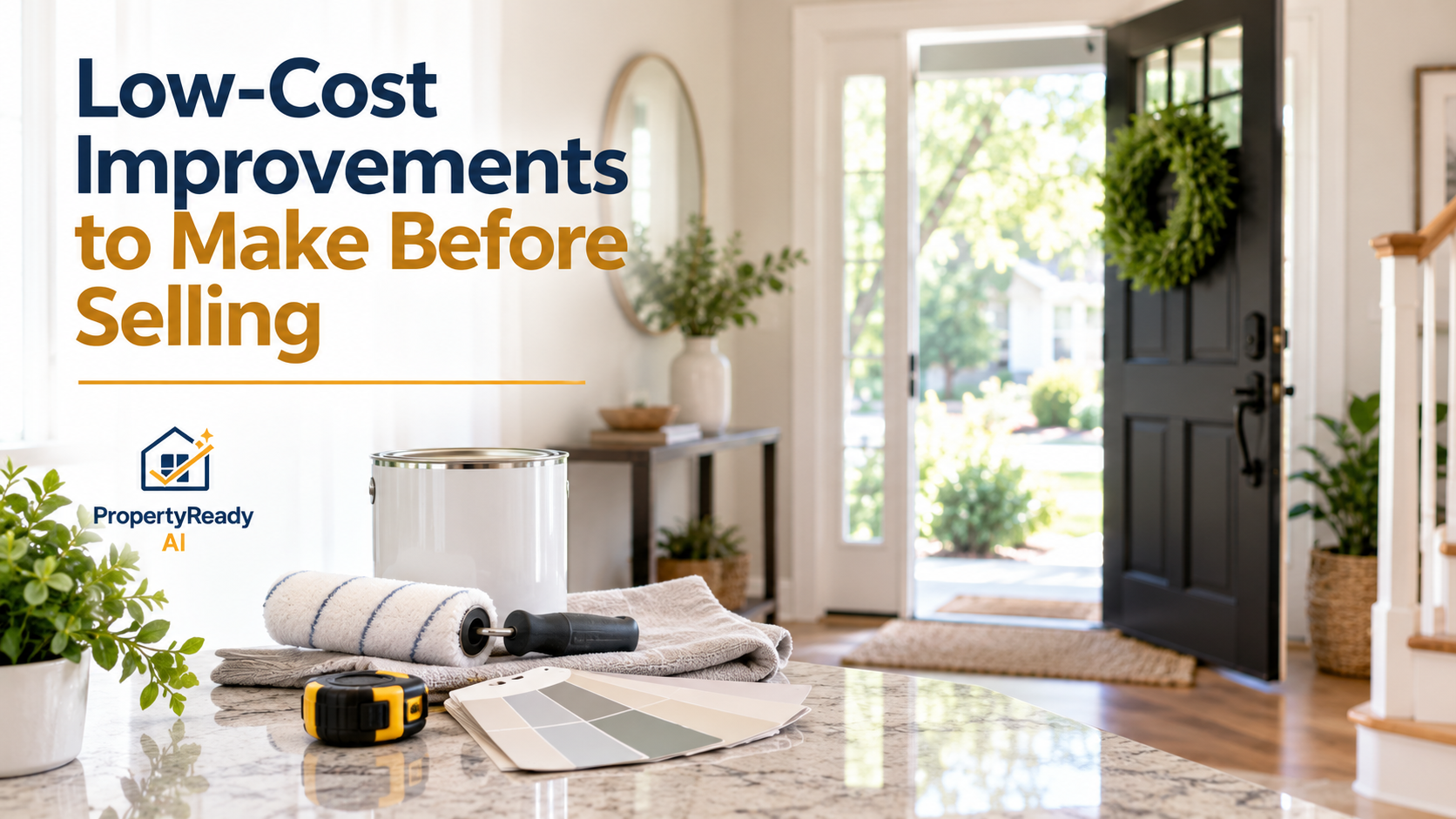
Preparing a home for sale does not automatically mean taking on a major renovation.
In many homes, the most useful preparation work is smaller, more targeted, and far less expensive.
Cleaning, decluttering, minor repairs, paint touch-ups, improved lighting, and simple exterior cleanup can all help a property present more clearly to buyers without turning the weeks before listing into a construction project.
The key is knowing where smaller improvements can make a visible difference—and where spending more may not be necessary.
This article covers general ideas that commonly help homes present well. The right priorities for a specific property depend on its actual condition, local market, timeline, and buyer expectations.
Start With Cleaning Before Buying Anything
One of the least expensive ways to improve a home's presentation is to clean it thoroughly.
Before replacing finishes or purchasing new décor, focus on areas buyers are likely to notice:
- kitchen counters and cabinet fronts
- bathroom sinks, mirrors, tubs, and showers
- floors and carpets
- windows and glass doors
- baseboards and trim
- light fixtures
- appliances that will remain with the home
- entryways
- visible grout and caulk
Cleaning can reveal whether something truly needs replacement or simply needed attention.
A well-maintained older surface can often present better than a newer one that looks neglected.
Declutter Before You Redecorate
Removing visual clutter can change the way a room feels without requiring any renovation at all.
Consider reducing:
- excess furniture
- crowded countertop items
- stacks of papers
- visible storage bins
- personal collections
- unnecessary décor
- overflowing shelves
- items stored on the floor
The goal is not to make the home empty.
It is to make the space easier to see.
A room that feels crowded may appear larger and calmer after a few items are removed, which can reduce the temptation to spend money redesigning the room.
Touch Up Paint Where It Is Actually Needed
Painting an entire house can be expensive and time-consuming.
In some cases, a smaller paint project may be enough.
Look for:
- obvious scuffs
- patched areas
- chipped trim
- heavily marked walls
- very bold accent colors that dominate a room
- areas where previous repairs remain visible
Touch-ups or repainting one room may solve the visible problem without creating a whole-house project.
If paint is already clean, neutral, and in good condition, repainting simply because the house is being listed may not be necessary.
Replace Small Damaged Hardware
Small hardware can make a room feel worn when it is damaged, loose, or visibly mismatched.
Low-cost items worth evaluating may include:
- cabinet knobs and pulls
- door handles
- switch plates
- outlet covers
- towel bars
- simple bathroom accessories
- damaged door stops
- missing drawer pulls
Do not replace functional hardware simply to chase a trend.
The goal is to correct obvious wear or inconsistency, not create another decorating project.
Improve Lighting With Simple Fixes
Lighting can influence how a room feels in person and in photographs.
Before replacing fixtures, check the basics:
- replace burned-out bulbs
- use consistent bulb temperatures where practical
- clean dusty fixtures
- open curtains and blinds
- remove objects blocking windows
- make sure lamps work
- replace a visibly damaged shade if needed
A brighter room may not need a new light fixture at all.
If a fixture is outdated but functional, consider whether it is actually hurting the presentation before replacing it.
Repair Small Visible Problems
Minor maintenance issues can sometimes create a larger impression than their repair cost would suggest.
Examples may include:
- loose cabinet hinges
- dripping faucets
- sticking doors
- loose handles
- damaged caulk
- small wall holes
- damaged screens
- missing trim pieces
- broken switch plates
- loose toilet seats
Straightforward repairs can help a property feel better maintained.
For electrical, plumbing, structural, roofing, HVAC, or other work requiring specialized knowledge, use an appropriately qualified professional.
Refresh Bathrooms Without Remodeling Them
Bathrooms often respond well to relatively modest preparation.
Consider:
- deep cleaning tile and grout
- replacing visibly damaged caulk
- clearing the vanity
- organizing toiletries
- straightening towels
- removing excessive products from the shower
- replacing a worn shower curtain
- cleaning mirrors and glass
- making sure lights work
These steps can improve presentation without replacing a vanity, tile, tub, or shower.
A bathroom that is older but clean and orderly can still show well.
Make the Kitchen Feel Clear and Functional
Instead of immediately considering a kitchen renovation, start with presentation.
Low-cost preparation may include:
- clearing excess countertop appliances
- putting dishes away
- cleaning cabinet fronts
- tightening loose hardware
- repairing a broken hinge
- cleaning the sink and faucet
- removing excess items from the refrigerator exterior
- organizing visible shelving
- touching up damaged paint
Buyers should be able to see the kitchen itself rather than the everyday items stored in it.
Improve the Front Entry
The entrance deserves attention because it helps set the tone for the rest of the property.
Simple improvements might include:
- sweeping the steps or porch
- cleaning the front door
- touching up chipped paint
- replacing a worn welcome mat
- cleaning exterior light fixtures
- removing clutter
- straightening planters
- replacing damaged or hard-to-read house numbers
You do not necessarily need a new front door or elaborate landscaping.
A clean, maintained entry can often accomplish the main goal.
Tidy the Yard Before Redesigning It
Large landscaping projects can become expensive quickly.
Start with basic maintenance:
- mow the lawn
- edge where appropriate
- remove weeds
- trim overgrown shrubs
- remove dead plants
- clear fallen branches
- add fresh mulch where needed
- clean walkways
- store hoses, tools, and bins neatly
These tasks can improve curb appeal without changing the landscape design.
Before spending heavily on new plantings or hardscaping, consider whether simple maintenance already solves the visible problem.
Clean Before Replacing Flooring
Flooring can be costly to replace.
Before making that decision, determine whether the issue can be improved through:
- professional carpet cleaning
- spot treatment
- floor polishing
- minor repair
- removing worn rugs
- correcting a small damaged area
A localized issue does not always justify replacing flooring throughout the house.
If the flooring is significantly damaged or badly worn, replacement may deserve consideration, but that is different from replacing it simply because it is older.
Use Décor Selectively
You do not need to buy a house full of new furniture and accessories to prepare for sale.
If a room needs a small visual lift, consider using what you already own.
Simple adjustments can include:
- removing excess accessories
- rearranging pillows
- simplifying shelves
- centering artwork
- straightening rugs
- removing worn or highly personal items
- adding one simple plant or neutral accent where appropriate
The property—not the décor—should remain the focus.
Spend Where the Visible Problem Actually Is
A common mistake is spreading a preparation budget evenly across the whole house.
Not every room needs equal attention.
One room may need a small repair.
Another may only need cleaning.
A third may already present well and need nothing.
This is why a fixed checklist can only go so far.
General advice can tell you what homeowners commonly consider. It cannot tell you which visible issues in your own home deserve the highest priority.
Create a Small Preparation Budget
Instead of beginning with a large renovation budget, consider setting a smaller preparation allowance first.
For example, you might divide potential spending into categories such as:
No-Cost or Very Low Cost
- decluttering
- rearranging furniture
- cleaning
- organizing
- removing excess décor
- yard cleanup
Modest Spending
- paint touch-ups
- small hardware
- caulk
- minor repairs
- cleaning supplies
- simple entry improvements
- professional carpet cleaning
Evaluate Before Spending More
- full-room painting
- fixture replacement
- larger flooring repairs
- significant landscaping
- appliance replacement
- major remodeling
The point is not to force every project into a specific dollar amount.
It is to make sure you solve the easiest and most visible problems before moving toward expensive work.
Know When Not to Spend
Sometimes the right improvement is no improvement at all.
If an area is:
- clean
- functional
- well maintained
- visually orderly
- neutral enough for broad appeal
- not creating an obvious buyer concern
your money may be better used elsewhere.
Preparing a home for sale is not about changing everything.
It is about focusing effort where it can make the property easier for buyers to understand and appreciate.
General Advice Is Only the Starting Point
Every home is different.
One homeowner may benefit most from exterior cleanup.
Another may have several rooms that simply need decluttering.
Another may have one visible repair that deserves attention before anything else.
That is where personalized prioritization becomes useful.
PropertyReady AI reviews photographs of your actual property and organizes visible preparation opportunities into a room-by-room report, prioritized actions, budget guidance, and a downloadable PDF.
The goal is not to give you more things to do.
It is to help you decide which things may deserve attention first.
Focus Before You Spend
Low-cost preparation can go a long way, but even inexpensive projects consume time and money.
Start with the obvious.
Clean.
Declutter.
Repair what is visibly worn or broken.
Refresh selectively.
Then reassess before moving on to bigger projects.
A thoughtful preparation plan can help you avoid turning a home sale into an unnecessary renovation project.
Not sure which improvements deserve your time and money?
PropertyReady AI reviews visible conditions in photos of your actual home and helps prioritize where your preparation effort may matter most.
Before you spend, see where your own property may need attention first.
Start your PropertyReady AI analysis at PropertyReadyAI.com